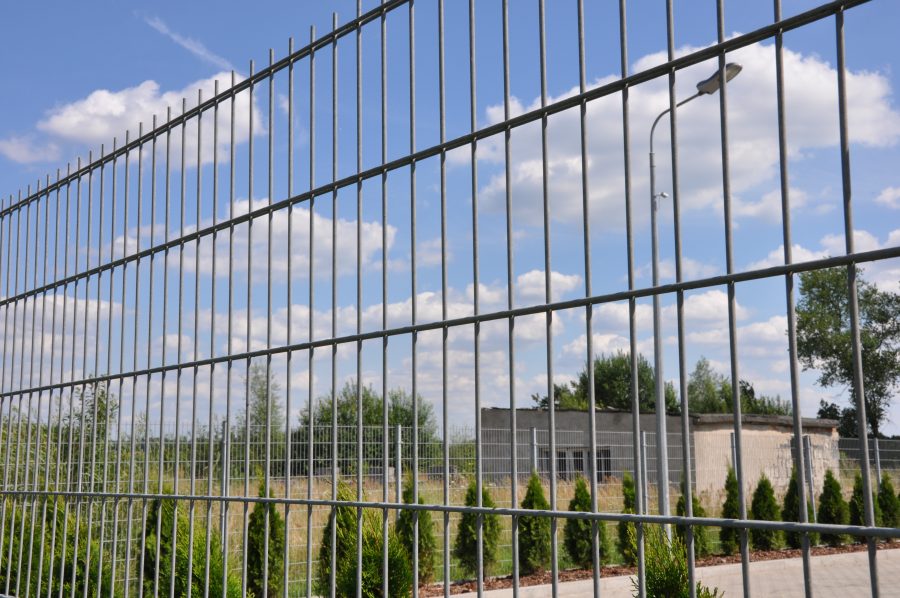
Choosing the Right Fence Can Be Surprisingly Difficult
If the decision were based purely on aesthetics, things would be much simpler. Unfortunately, selecting a fence also means making a key decision about the type of fencing itself. In most cases, the choice comes down to three main types:
-
Chain-link fences
-
Panel fences
-
Palisade fences
In this article, we’ll take a closer look at each of these popular options.
Chain-Link Fencing
This is the simplest and most affordable type of fencing. In fact, with a bit of determination, many people can install it themselves and even transport all the materials in a personal car. At first glance, it may seem like the perfect solution. And in some cases, basic chain-link fences can serve their purpose quite well. However, it’s important to remember that their popularity in the past wasn’t due to quality — but rather the lack of better alternatives. Today, the poor aesthetics, limited durability, and low security level of chain-link fences make them a less attractive option for most homeowners.
Panel Fencing
Panel fences are a great alternative to traditional chain-link fencing. They retain the simple installation and low cost, but offer a far more attractive and modern appearance. One of the key advantages of this type of fencing is its rigidity. Unlike chain-link, it doesn’t bend easily — for example, under the pressure of hedges or coniferous plants. However, keep in mind that panel fences do not provide much privacy. While this may be a drawback for some, it can also be an advantage: an intruder will be clearly visible to your neighbors. If privacy is important to you, consider combining a panel fence with appropriate greenery to create a natural visual barrier.
Palisade Fencing
Palisade fencing follows a similar principle to panel fencing: the structure is assembled from prefabricated, standardized panels. The difference lies in the materials and strength. Instead of a wire mesh, palisade fences are built using steel profiles, which offer much higher levels of safety and durability. You can also choose a heavy-duty version of palisade fencing. These systems feature a reinforced structural frame, significantly increasing the level of protection and resistance to external forces. Another safety-related advantage is the absence of traditional horizontal bars, which makes it much more difficult for potential intruders to climb over the fence. Some versions also feature sharpened or angled top edges, which serve as an additional security measure.

In summary: when choosing industrial fencing, it’s important to keep in mind the specific features you expect from the system — especially in terms of protection against intruders.
Once you clearly define your needs, revisiting the available options becomes much easier and the decision-making process more straightforward.